Before the Dome and the Slides: Trafford Park's Hidden History as the Engine of the Industrial Revolution |
You know it as a blur of roundabouts, retail parks and warehouse units you drive past on the way to the Trafford Centre. But 130 years ago, this land was becoming one of Britain's great industrial powerhouses — and another transformation is under way. |
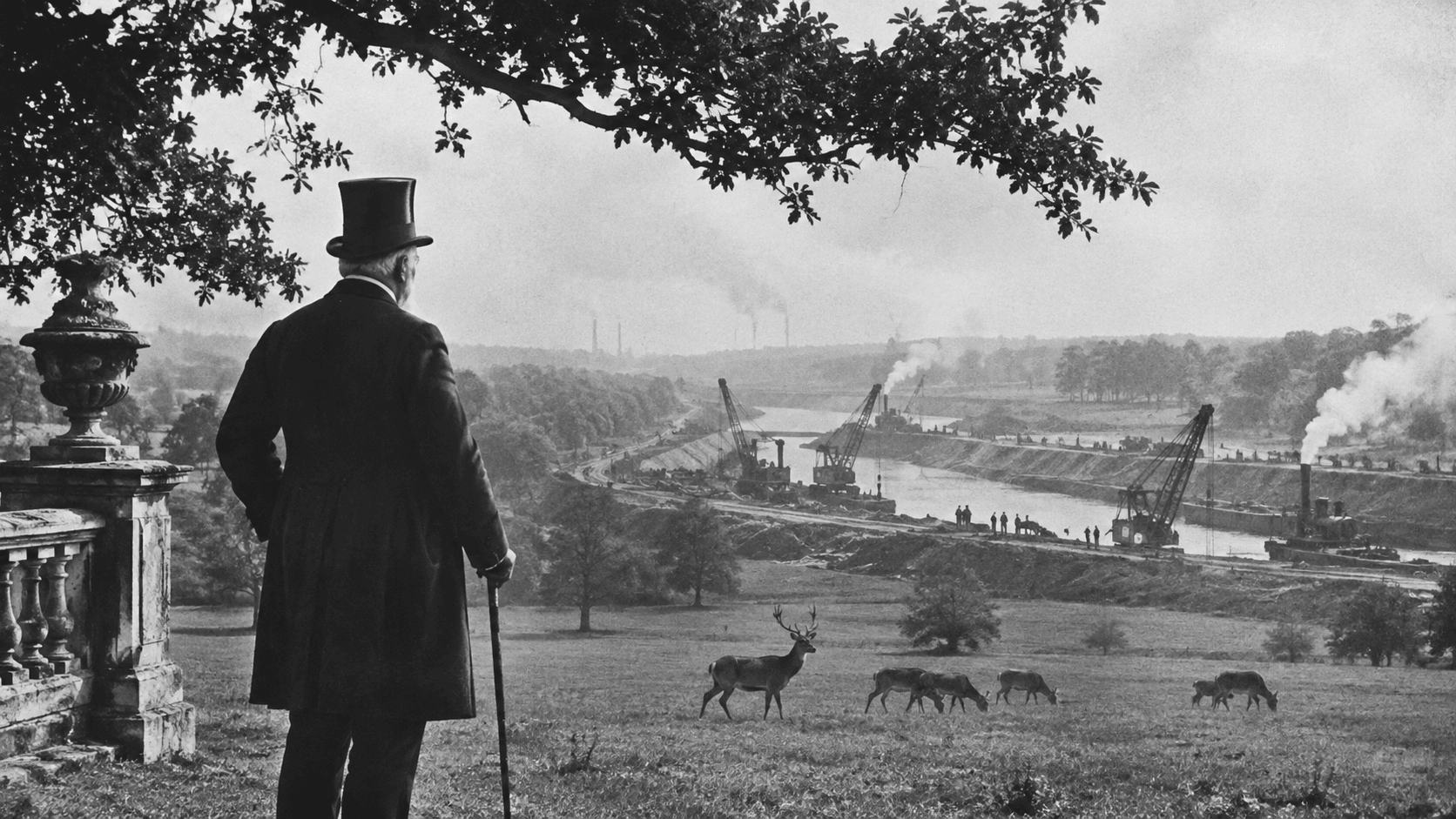 Artist's impression of the de Trafford estate during the industrial transformation of the 1890s |
Let me paint you a picture.
It's 1896. Imagine Sir Humphrey Francis de Trafford looking out over the deer park his family had owned since the early 1200s. The grass is green, the deer are grazing, and the air smells like actually, wait. Is that coal smoke drifting over from the city? And what's that noise? Ah. The Manchester Ship Canal has carved its way past the estate, changing its future for good.
The canal opened in 1894. The de Traffords had opposed its construction, and by 1896 the estate was on the market. After efforts to secure the land for public use came to nothing, financier Ernest Terah Hooley bought it and set about turning it into an industrial park.
And that, that moment of aristocratic surrender, is how Trafford Park was born.
🦌 From Deer Park to 75,000 Jobs
The council tried to buy it Manchester's civic leaders were interested in preserving large parts of the estate for public use. But they could not agree terms in time. The land went to a private buyer with other ideas.
That buyer helped turn Trafford Park into the world's first planned industrial estate.
And by God, did it work.
1911: Ford opens its first factory outside the United States right here in Trafford Park.
Second World War: Around 75,000 workers were employed across Trafford Park at its peak. Ford's wartime factory produced Rolls-Royce Merlin engines for Spitfires and Lancasters, while Metropolitan-Vickers helped build Lancaster bombers. This place was one of the industrial engines behind the RAF's war effort.
Post-war: Tens of thousands still worked in engineering, food production, vehicles and other industries, even as the industrial landscape began to change.
Decline: Factories closed, employment fell sharply, and the docks closed in 1982. By the 1980s, the park's future looked very different from its wartime heyday.
At its peak, Trafford Park employed an estimated 75,000 people. It wasn't just a workplace. It was a civilisation. It had its own railway network. Its own power infrastructure. Its own village where workers lived, raised families, and drank in local pubs.
The Trafford Park Heritage Centre still preserves photographs, memories and records of the people who made this industrial powerhouse work.
🏚️ The Ghost Town Phase
Decline wasn't swift. It was slow, grinding, and brutal.
The docks closed in 1982. Ford's original vehicle operation had moved to Dagenham decades earlier, although Ford later returned to Trafford Park for wartime aircraft-engine production. Other factories contracted or disappeared. By the late twentieth century, parts of the world's first industrial estate were struggling with vacant industrial buildings and ageing infrastructure.
The Manchester Mill offered a memorable description of the landscape: "a limbo of warehouses, sheds and roundabouts."
For a while, it looked as though Trafford Park might be remembered only in sepia photographs and the fading memories of workers in local clubs.
But here's the twist: Trafford Park never simply ceased to exist. It remained a major working industrial estate, and public regeneration efforts from the late 1980s helped bring investment back.
Then something unexpected happened. |
Interesting Facts |
|
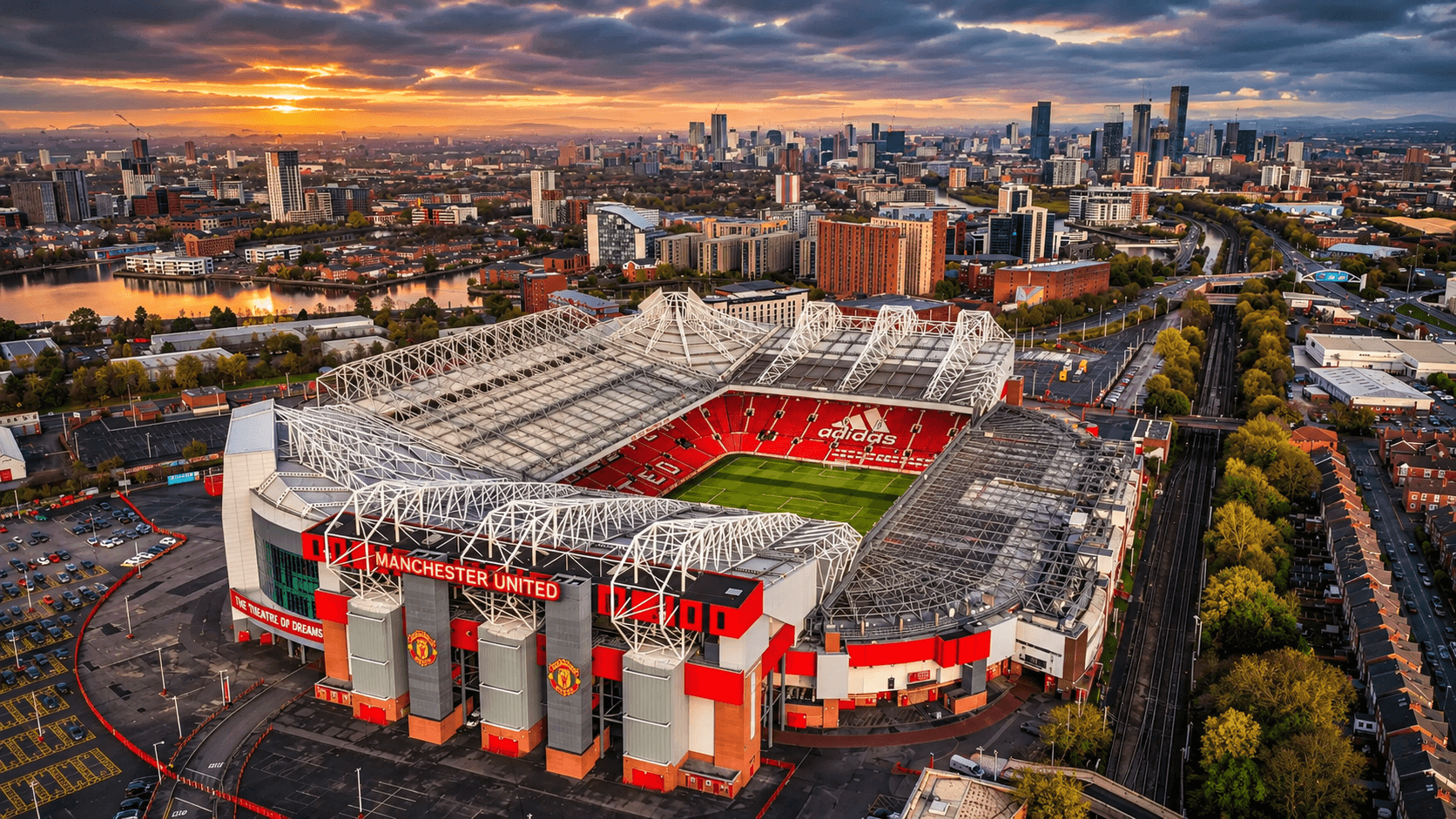
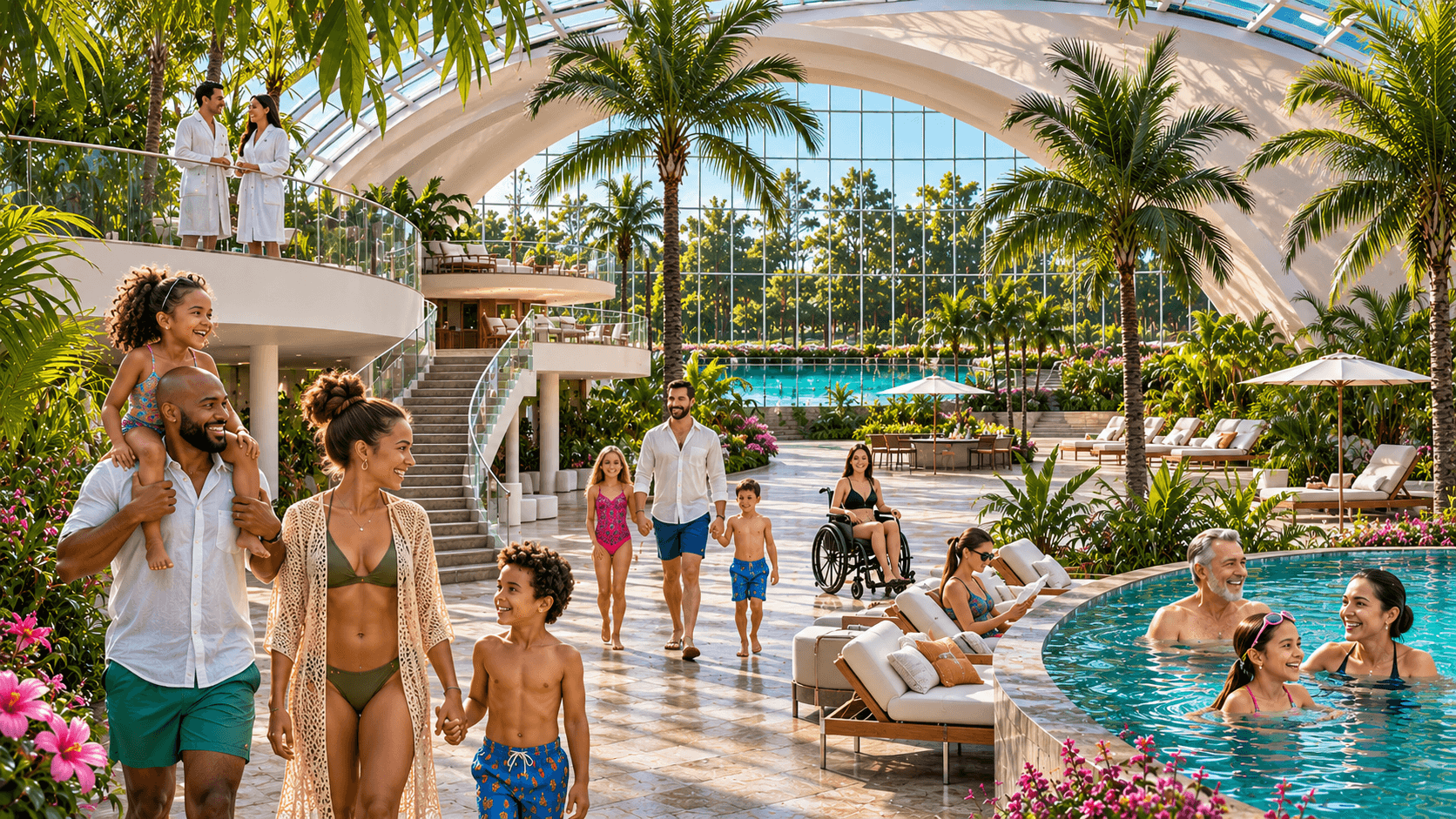
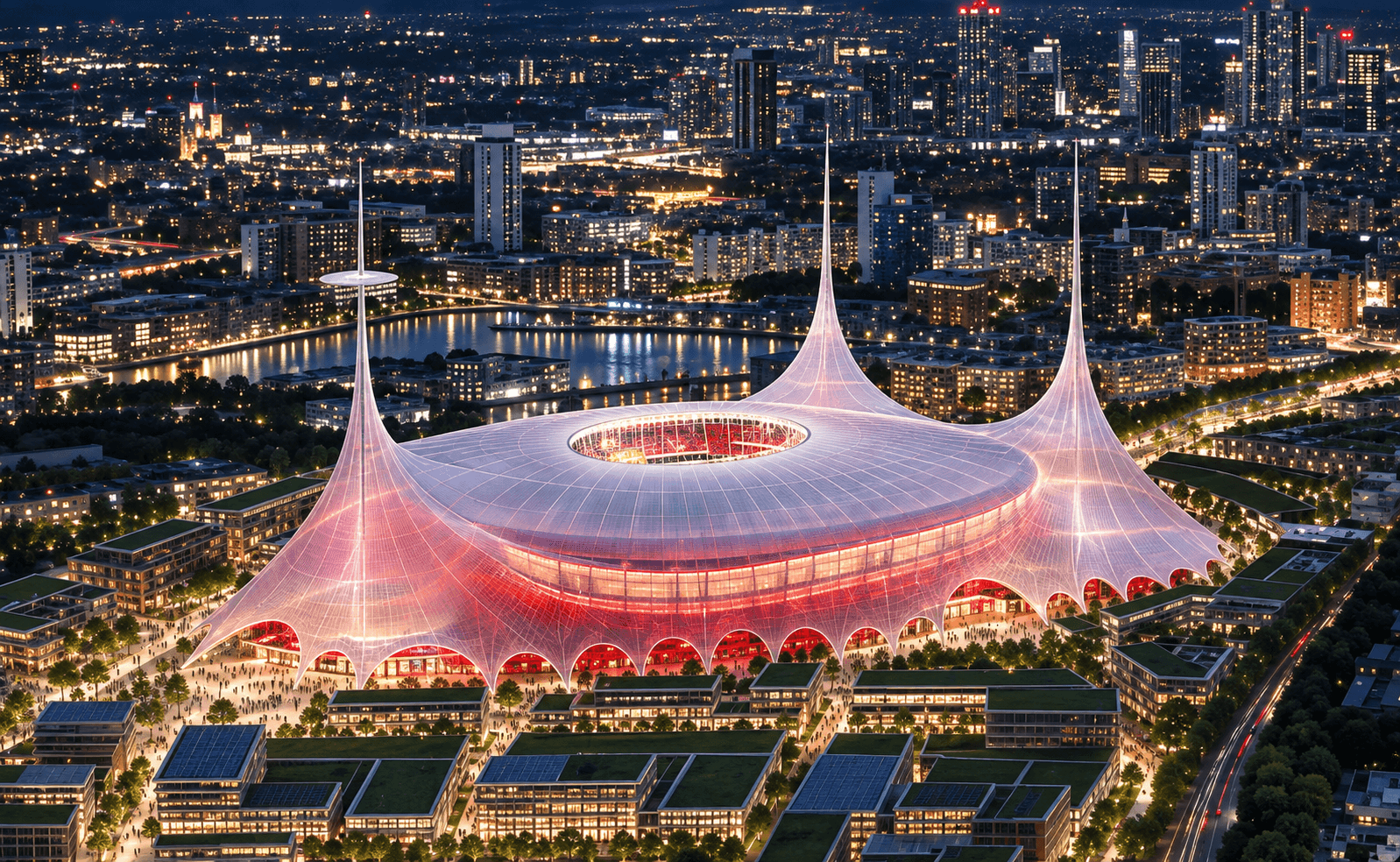
🌅 The Rebirth (You're Living Through It) In 1998, the Trafford Centre opened nearby, changing the way people thought about this corner of the borough. Critics questioned whether a shopping centre that big, that far from the city centre, could work. They were spectacularly wrong. And now? The next chapter is being written as you read this. Therme Manchester: A planned £500m tropical wellbeing resort on the former EventCity site, with 18 water slides, pools and thermal experiences. The latest developer update targets 2029 for opening, rather than late 2028. New Trafford Stadium: Manchester United's proposed 100,000-seat stadium, with an initial concept from Foster + Partners, roughly 350 metres from Old Trafford. The estimated £2bn-plus cost and final design are not settled; the wider masterplan places the stadium in a 2031–2035 delivery phase, not a confirmed 2030–31 opening. Trafford Waters: Plans for around 3,000 homes, alongside amenities, commercial space and a school, are part of a separate regeneration scheme. Delivery is phased and ongoing. The investment question: Claims of "£7 billion+" often mix project costs with forecasts of wider economic benefit. The £7.3bn figure attached to Old Trafford regeneration is a projection of potential annual UK economic contribution, not a single committed investment pot. The same wider area that once made engines for Lancaster bombers is now preparing for a tropical paradise under glass. The canals that carried coal and steel may one day reflect the lights of a new football stadium — if the plans come to fruition. There is something deeply, absurdly poetic about that. 📍 Where the Ghosts Still Walk If you want to feel this history for yourself, you don't need a time machine. You just need to know where to look. Trafford Park Heritage Centre: A small heritage collection at St Antony's Centre, with material about the industrial estate and its workers. Check current weekday opening hours before visiting. Manchester Ship Canal and Salford Quays waterfront: Explore publicly accessible waterside routes and look across to Trafford Park's industrial landscape. The Bridgewater Canal is a separate waterway; there isn't a continuous Bridgewater Canal towpath from Castlefield via Salford Quays into Trafford Park. Trafford Park Village: Explore the area's numbered streets and surviving traces of its working-class past. Much of the original housing was demolished, so don't expect an intact village of Edwardian cottages. Dunham Massey: A beautiful National Trust deer park that gives a sense of the region's old estate landscapes — but it belonged to the Booth and Grey families, not the de Traffords. It is a comparison, not the original Trafford Park estate. In roughly 130 years, this patch of Trafford has gone from aristocratic deer park to industrial powerhouse, through painful decline and into another era of reinvention. Soon, if the plans stay on track, there may even be a tropical holiday destination with water slides. Only in Manchester!! |
Editorial Note — Historical Claims and Future Plans
The opening scene is a creative reconstruction, not a documented eyewitness account or quotation. Trafford Park's industrial significance and wartime production are supported by local heritage records. Dates, costs, capacities and economic benefits for future developments are current proposals or forecasts, not guarantees. Article checked against sources available in November 2026. |
🔗 Useful Resources |
Trafford Council — Trafford Park history and design code: https://trafforddesigncode.uk/trafford-places/trafford-park/
Science Museum Group — Trafford Park Estates Ltd: https://collection.sciencemuseumgroup.org.uk/people/ap14596/trafford-park-estates-limited
Exploring Trafford's Heritage — Trafford's War Machines: https://exploringtraffordsheritage.omeka.net/exhibits/show/80years/manufacture
The Guardian — The world's first industrial estate: https://www.theguardian.com/cities/2015/apr/29/manchester-trafford-park-world-first-industrial-estate-history-cities-50-buildings
The Manchester Mill — Trafford Park's warehouses and roundabouts: https://manchestermill.co.uk/trafford-park-is-a-limbo-of-warehouses-sheds-and-roundabouts-what-could-it-be-instead/
Trafford Park Heritage Centre — Opening information: https://www.stantonyscentre.org.uk/heritagecentre-openingtimes/
Peel Waters — Therme Manchester update: https://www.peelwaters.co.uk/news/therme-manchester-takes-shape-as-new-construction-milestone-revealed/
National Trust — Dunham Massey history: https://www.nationaltrust.org.uk/visit/cheshire-greater-manchester/dunham-massey/history-of-dunham-massey |

19 Comments
Join the conversation
Now I want to know what happened next. You can't stop right after saying something unexpected happened!
Good to hear the late 1980s investment mentioned. Trafford Park didn't simply disappear when the docks shut.
That description of sheds and roundabouts made me laugh. It still fits a few stretches I drive through!
My nan lived in Trafford Park Village. She always talked about how close everyone was back then.
Imagine the de Traffords watching the Ship Canal arrive next to their deer park. Everything changed so quickly.
Helen R.The canal must have made it clear the estate was never going to stay a deer park.
I pass through Trafford Park most weeks and never think about the Merlin engines made there. That's quite something.
A whole railway network inside Trafford Park sounds fascinating. I wonder how much of it you can still spot.
Liz CarterI’d love to see an old map laid over the roads now. I bet a few odd bends would suddenly make sense.
Calling it a ghost town feels a bit much. Plenty of people were still working there through the rough years.
Graham W.Fair point. Some buildings were empty, but calling the whole place a ghost town overlooks the people who kept going to work there.
I'd like to visit the Trafford Park Heritage Centre. Those old workers' photos must have some stories behind them.
My dad remembered the docks closing in 1982. He said it felt like the end of an era.
Peter L.My grandad said much the same. Even people who didn’t work at the docks felt that closure.
Ford's first factory outside the US was in Trafford Park? Never knew that, and I've lived nearby for years.
Shame the council couldn't secure some of the estate for public use. A bit more green space would be lovely.
75,000 workers is hard to imagine. The roads around Trafford Park feel busy enough today!
My grandad worked at Metropolitan-Vickers. He'd have loved seeing the wartime workers remembered.
I had no idea Trafford Park used to be a deer park. Hard to picture it with all those warehouses now!